Wardogs Season 2 rain has turned the extraction shooter into a completely different game and here is what actually changed
You can order the same kind of articles for your own video to boost it on YouTube and Google. Just message the Telegram bot @sat_sit_bot. Articles with your video embedded are written and posted by the bot itself — on popular topical sites (no ads). Your first 50 articles are free.
· based on the channel shroud
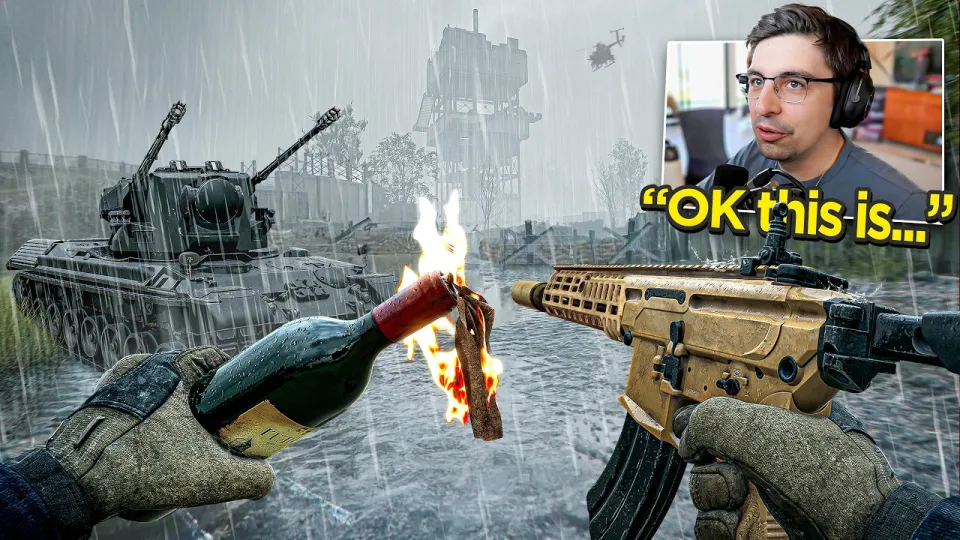
Wardogs Season 2 adds heavy rain, and that single weather system changes the extraction shooter more than most patches do: visibility drops, sniping loses reliability and every fight turns into a close-range scramble. The rain arrived alongside the season update covered in shroud's breakdown, and the practical takeaway is that old habits — long sightlines, clean torso shots, slow rotations — stop working. You can follow the full stream companion audio through the shroud Spotify show if you want the unedited sessions behind the highlights.
Why Wardogs feels like a completely different game in the rain
The core change is that rain removes information, and Wardogs is a game built on information. In dry weather a player on a ridge or a tower can scan 200-plus meters of open ground and pick off movement; in a downpour the same player sees gray noise, blurred silhouettes and a windshield full of water droplets. That compression of sightlines pushes engagements inward: bridges, stairwells, building interiors and the south tower of Ozeti become the places where fights actually resolve, because those are the only places where both sides can confirm what they are shooting at.
The second effect is audio masking. Rain is a constant background layer, which makes footsteps, reloads and distant gunfire harder to isolate. Players who relied on sound to pre-aim corners now need to clear rooms more deliberately and hold tighter angles instead of tracking noise across a compound. The result is a slower, more methodical raid pace in the open and a much more violent one once a squad commits to a building.
How the rain changes sniping, spotting and rotations
Long-range play is the biggest loser. Even at roughly 190 meters, targets can vanish into the rain curtain, which means a scoped rifle is no longer a guaranteed answer to an open-field rotation. Practical adjustments:
- Treat anything past 150 meters as suppressive fire rather than a kill attempt; you are buying time, not confirming kills.
- Move between hard cover in short bursts instead of crossing open ground in one long run — a rain-blinded enemy may not see the first sprint, but will hear the second.
- Prioritize interior routes and elevation changes that keep you under roofs, where rain does not degrade your own vision.
- Expect the map's landmarks to flip meaning: a bridge that was a death trap in clear weather becomes a chokepoint you can actually hold, because nobody can overwatch it from distance.
Ammo choice and leg shots matter more than raw aim
One of the recurring lessons in the rain meta is that bullet selection decides fights more than flick speed. Against armored opponents, torso and head shots get absorbed, while leg shots bypass plate coverage and force a slow, vulnerable target. HP ammunition is the tool for that job, and it only pays off if the player actually aims low — a pattern that shows up repeatedly when a squadmate is told to shoot legs, agrees, then keeps firing center mass and blames the weapon.
The takeaway for your own loadout:
- Carry HP rounds specifically for armored targets and switch to them before the fight, not during it.
- Repack magazines behind cover; opening an inventory mid-fall or mid-push is how players die to the same enemy who just shot them.
- If a gun feels weak, check the ammo type before writing off the weapon — several complaints about "the worst gun in the game" trace back to the wrong magazine.
Do infrared and thermal optics become mandatory?
Rain reduces contrast, and anything that restores contrast becomes disproportionately strong. Infrared goggles and thermal sights cut through the gray wash and give back the ability to pick a silhouette out of foliage or a doorway, which is exactly the capability the weather removed. That does not make them mandatory, but it does make them a priority purchase for players who like to hold open angles or overwatch a bridge.
The trade-off is weight and cost. A squad that all buys optics has less room for armor, meds and ammo, so the sensible split is one or two optic-equipped players acting as spotters while the rest carry heavier protection and close-range firepower. In rain, a spotter who can actually see is worth more than a fourth rifle.
Squad coordination beats lobby size
A recurring question from viewers is why a six-player group struggles against a lobby of around twenty. The answer is not numbers — it is communication structure. Twenty players who are not on the same comms fight as twenty separate players, while a six-stack sharing callouts, ammo types and angles fights as one unit. Rain amplifies that gap, because the squad that talks is the squad that knows which doorway is already covered.
In practice, that means assigning roles before contact: one player calls targets, one watches the flank, one carries the optic and one manages the ammo switch. A larger but silent group will keep walking into the same pre-aimed corner, and the rain will hide the fact that they are doing it.
Typical viewer questions about the new weather
Most doubts around the rain update come down to three things: whether sniping is dead, whether the weather is random, and whether the change is good for the game. Sniping is not removed, it is demoted — it still wins fights inside 150 meters and still controls chokepoints, but it no longer dominates open ground. The randomness question matters less than adaptation: the players who re-gear around visibility and audio are the ones who stop dying to the storm. And on whether it is good, the honest answer is that rain widens the skill gap in a healthy way, rewarding positioning, ammo knowledge and comms over raw mechanical aim.
Official links from the stream
- shroud Spotify show
- Logitech G — promo code shroud
- Maingear — shroud reference PC
- shroud on Twitter
- shroud on Twitch
Final verdict on Wardogs Season 2 rain
The rain is not a cosmetic filter; it is a redesign of how information flows through a raid, and it rewards players who re-learn sightlines, ammo types and rotations instead of repeating dry-weather habits. Squads that communicate and gear for reduced visibility will find the new weather an advantage, while lone snipers and silent large groups will keep feeding kills to the storm. If you want to see the adaptation in action, the breakdown by shroud on his channel shows exactly how quickly a good player rewrites their approach mid-raid. For the full sessions behind those highlights, the shroud Spotify show is the place to start.
Key takeaways
- Wardogs Season 2 introduced heavy rain as a dynamic weather condition that cuts visibility and changes how every raid plays out.
- Rain makes long-range sniping far harder; spotting targets becomes unreliable even around 190 meters.
- Armor-piercing and HP ammo choice matters more in rain fights, since leg shots bypass armor while torso shots do not.
- Infrared goggles and thermal optics gain value in rain because they cut through the reduced contrast.
- Squad size does not decide fights: a coordinated group on comms can outplay a larger uncoordinated lobby.
Questions & answers
Does the rain in Wardogs Season 2 make sniping useless?
No, but it demotes it. Long-range shots past roughly 150–190 meters become unreliable because targets disappear into the rain, so scoped rifles shift from kill tools to suppression and chokepoint control. Inside that range, and especially around bridges and building interiors, sniping still works fine.
Why do players keep dying after being told to shoot legs?
Because leg shots only work if the player actually aims low and uses the right ammunition, such as HP rounds against armored targets. Torso and head shots get absorbed by plates, so a player who agrees to shoot legs but keeps firing center mass will lose the fight and blame the weapon instead of the aim.
Is a bigger squad automatically stronger in rain fights?
No. A group of around twenty players who are not sharing comms fights as twenty individuals, while a coordinated six-stack with assigned roles and callouts fights as one unit. Rain amplifies that gap because visibility is reduced and only the talking squad knows which angles are already covered.
Are infrared goggles worth buying for rainy raids?
They are a strong pick because rain kills contrast and infrared or thermal optics restore it, letting you pick silhouettes out of foliage and doorways. The catch is weight and cost, so the efficient setup is one or two optic-equipped spotters supporting the rest of the squad.
Source: Wardogs Is a Completely Different Game Now... · Markdown version