5 lessons VALORANT fans can take from PRX vs LOUD at Champions Shanghai
You can order the same kind of articles for your own video to boost it on YouTube and Google. Just message the Telegram bot @sat_sit_bot. Articles with your video embedded are written and posted by the bot itself — on popular topical sites (no ads). Your first 50 articles are free.
· based on the channel VALORANT Champions Tour
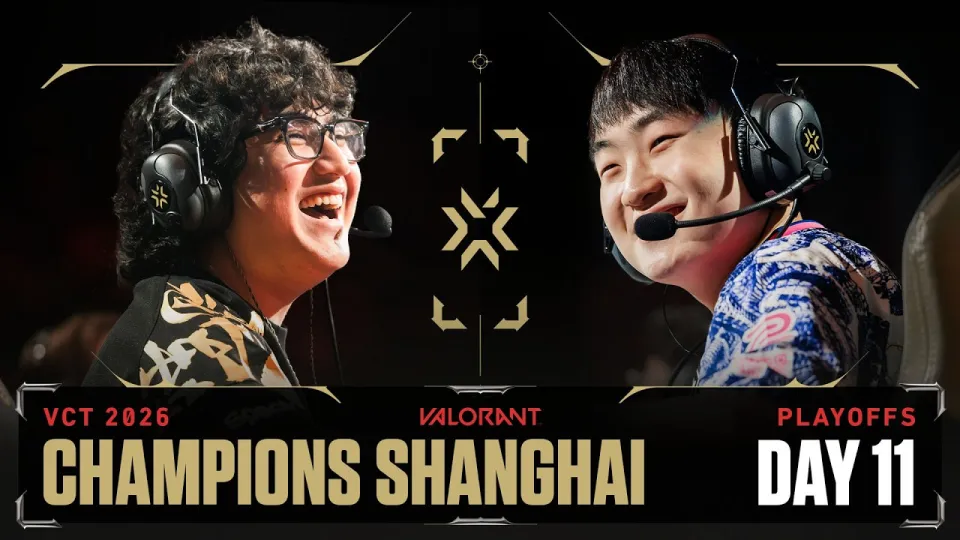
VALORANT Champions Shanghai is the biggest tournament of the 2026 season, and the PRX vs LOUD Playoffs Stage match on Day 11 is one of its clearest case studies. The series shows how a team can build a lead and still lose control, and why discipline in trades matters more than raw aggression. For anyone tracking the bracket, results and schedule updates land fastest through the official VALORANT Esports updates on X.
What the Champions Shanghai format puts on the line
Sixteen teams from the Americas, China, EMEA and Pacific arrived in Shanghai to decide the 2026 world champion. The event window runs from September 24 to October 18, which means the Playoffs Stage sits deep into a month of accumulated preparation, map pools and anti-stratting. By Day 11, every remaining squad has been scouted heavily, so surprise picks matter less and execution under pressure matters more. That context is exactly why a PRX vs LOUD playoff series reads as a test of nerve rather than a test of creativity.
The tournament also carries a narrative the broadcast leans into: two Masters events in 2026 produced two different champions, and a new generation of challengers has closed the gap on established names. In a field that deep, a single dropped map can end a run.
Why PRX leads keep turning into losses
The recurring criticism around PRX is not a lack of skill but a lack of discipline when ahead. Viewers who watched the series pointed to maps where PRX built significant advantages and then lost them, and to earlier matches where a 9-3 lead slipped away. The pattern described is consistent: unnecessary 1v1 duels, reliance on raw aggression instead of fundamentals, and individual fights taken when a trade or a reset would be safer.
That style is also what makes PRX entertaining and dangerous. The problem is variance. When a team converts every round into a coin-flip duel, a five-round cushion is not really a cushion, because the opponent only needs a few won duels to swing momentum. Against a structured opponent, the same aggression that creates a lead becomes the mechanism that surrenders it.
How LOUD punish over-aggression with trades
The contrast fans drew in this series is instructive: LOUD play in pairs and triples so that every engagement has a follow-up, while PRX players repeatedly found themselves fighting alone against multiple defenders. Trading is not a passive style. It is a way of guaranteeing that a lost duel still produces value, which flattens the variance PRX leans on.
Three practical elements define that approach:
- Entry players move with a second body close enough to punish the defender who reveals position.
- Utility is spent to isolate angles rather than to open a site blindly, so the first contact happens on favorable terms.
- Post-plant setups prioritise crossfires and safe positions over hunting extra kills.
When a team trades consistently, an opponent's highlight-reel individual plays stop translating into round wins. That is the mechanism behind the frustration in the community reaction to this match.
The PRX classic and what it says about playoff pressure
The phrase circulating after the series was that this was another classic PRX playoff collapse, delivered with the resignation of fans who say they are used to it. That reaction is worth taking seriously because it describes a repeatable pattern rather than one bad day. Playoff VALORANT compresses margin for error: fewer rounds of preparation, higher stakes per map, and opponents who have watched every previous collapse.
For viewers, the takeaway is to judge teams on how they close maps, not how they open them. A 9-3 half is information about a team's ceiling; the following six rounds are information about its floor. Teams that win trophies tend to be the ones whose floor is highest, not the ones with the flashiest peaks.
Reading the bracket without spoilers
Champions VODs are long, and the community has adapted. Spoiler blocks with timestamps in the replies are a standard practice for anyone who wants to watch the series later without knowing the result, and they work because the full broadcast is published as a single video. If you plan to watch the PRX vs LOUD match after the fact, avoid comment sections on the official channels and use the timestamp markers rather than scrolling.
The same logic applies to pick'ems. Several viewers noted that the result damaged their brackets, which is the normal cost of a playoff format where upsets are structural rather than accidental. Brackets built around presumed favorites in the Americas region took the heaviest hit.
What to watch in the remaining Shanghai matches
Three themes are worth tracking as the Playoffs Stage continues. First, whether the Americas representatives convert strong regular-season form into series wins, since the region's depth is widely considered its strength. Second, whether teams that rely on disciplined trading keep beating teams that rely on individual mechanics. Third, how map pools hold up after eleven days of shared scouting, when comfort picks are no longer secret.
For PRX specifically, the question is whether the team adjusts its approach in late-map situations or repeats the same pattern. For LOUD, the question is whether the trade-heavy structure survives against opponents who force faster tempo. Both answers will shape how the Shanghai bracket resolves.
Useful links
- Official VALORANT Esports updates on X
- VALORANT Esports on Facebook
- VALORANT Esports on Instagram
- VALORANT Esports on TikTok
- VALORANT on Twitch
Bottom line
The PRX vs LOUD series at Champions Shanghai is a compact lesson in why leads are fragile in playoff VALORANT: aggression without trades hands momentum back, and disciplined teams convert small edges into maps. PRX's ceiling remains high, but the gap between ceiling and floor is what keeps costing them in deep runs. LOUD's structure is the model that punished it here. The full broadcast and highlights come from the VALORANT Champions Tour channel, which is the best place to review the series round by round. For schedule and bracket updates, follow the official VALORANT Esports account on X.
Key takeaways
- Champions Shanghai runs September 24 to October 18 with 16 teams from Americas, CN, EMEA and Pacific.
- PRX vs LOUD was a Playoffs Stage match on Day 11 of the event.
- Viewers repeatedly point to thrown leads as the core PRX problem in high-pressure series.
- LOUD's trade-heavy, fearless style is the contrast fans highlight against PRX's solo duels.
- The VALORANT Champions Tour channel publishes the full VOD and highlights of the series.
Questions & answers
Did PRX actually have big leads against LOUD?
Yes. Viewers who watched the series described maps where PRX built substantial advantages and then lost them, echoing an earlier match where a 9-3 lead was surrendered. The criticism focused on decision-making in those moments rather than on aim or map pool.
Why do fans call this a classic PRX playoff performance?
The label reflects a repeated pattern rather than a single result. Supporters point to strong regular-season and group-stage showings followed by collapses in high-pressure series, often through unnecessary individual duels instead of structured trades.
What makes LOUD different in these close series?
LOUD consistently trade kills, so a lost duel still produces value and the round stays winnable. That approach reduces variance, which is exactly what punishes teams that rely on solo plays and raw aggression when holding a lead.
How can I watch the match without spoilers?
The full series is published as one long VOD on the VALORANT Champions Tour channel. Use the spoiler blocks with timestamps that viewers post in replies, and avoid scrolling through comment sections before you have watched the maps.
Source: PRX vs. LOUD — VALORANT Champions Shanghai — Playoffs Stage — Day 11 · Markdown version